The rise of the smart city
TECHNOLOGYThursday, March 27th, 2014
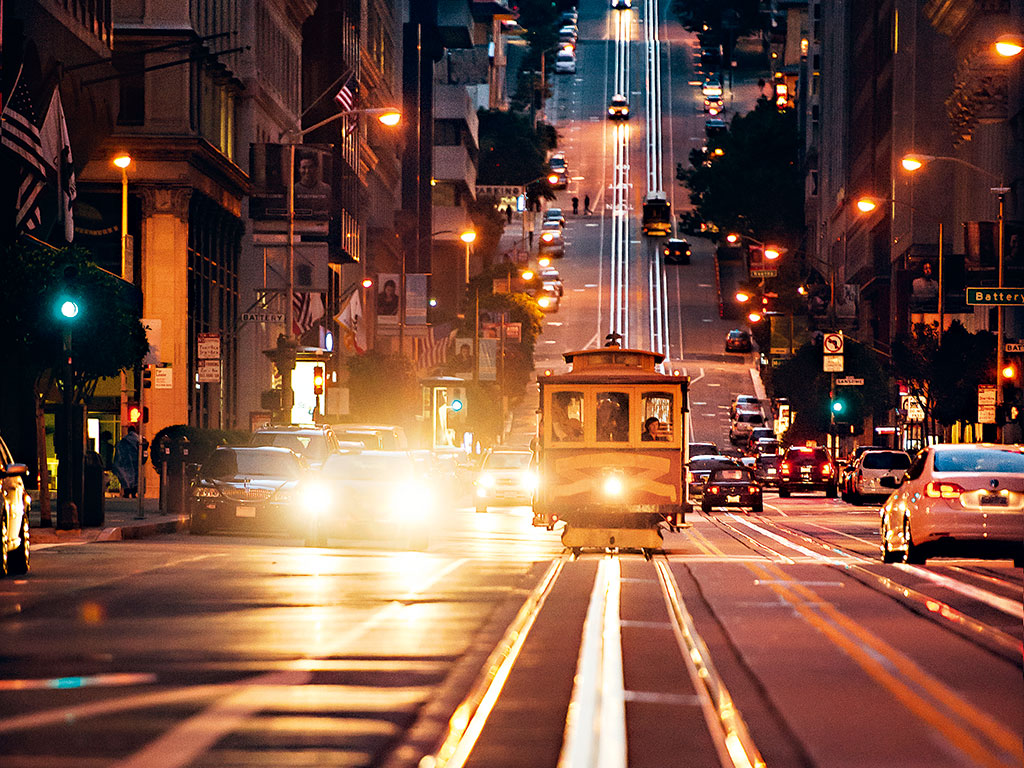
 San Francisco, one of The New Economy's top 20 smart cities of 2014. As more people gravitate towards cities, it is important to ensure technology can keep up with increases in populations
We examine the top 20 cities that look the likeliest to drive change in the future, in The New Economy’s Smart Cities 2014
For the first time in history the majority of the human population are city dwellers, according to the World Health Organisation. As few as two in every 10 people lived in urban areas 100 years ago: by 1990, that figure had risen to 40 percent and by 2010 exceeded 50 percent. Those figures are a testament to the growing importance of cities in modern economies.
The number of urban residents is forecast to grow by approximately 60 million every year and the overall number of city dwellers is expected to almost double between 2009 and 2050 – from 3.4 billion to 6.4 billion. This state of affairs is leading to increasingly sophisticated technological, societal and economic gains in some of the world’s most advanced cities.
Not to be confused with the all-too-familiar patchwork of office blocks and assorted greys, these ‘smart’ cities are instead vibrant hubs for research and progress. The concept might sound foreign to the many who’ve come to associate cities with pollution and over population, but it is one that is steadily gathering momentum.
These cities, more than anything else, are catalysts for change, and should serve as prime examples of how communities can not only boost their fortunes but also their general quality of life.
We are proud to announce the 20 cities we believe best represent the world of tomorrow. They are far from an exhaustive rundown of the world’s greatest cities, but instead represent the scope and scale of the changes at hand.
The number of urban residents is forecast to grow by approximately 60 million every year and the overall number of city dwellers is expected to almost double between 2009 and 2050 – from 3.4 billion to 6.4 billion. This state of affairs is leading to increasingly sophisticated technological, societal and economic gains in some of the world’s most advanced cities.
Not to be confused with the all-too-familiar patchwork of office blocks and assorted greys, these ‘smart’ cities are instead vibrant hubs for research and progress. The concept might sound foreign to the many who’ve come to associate cities with pollution and over population, but it is one that is steadily gathering momentum.
These cities, more than anything else, are catalysts for change, and should serve as prime examples of how communities can not only boost their fortunes but also their general quality of life.
We are proud to announce the 20 cities we believe best represent the world of tomorrow. They are far from an exhaustive rundown of the world’s greatest cities, but instead represent the scope and scale of the changes at hand.
scale of the changes at hand.
ACCRA
 Ghana is among the fastest-growing economies in the world, thanks largely to its burgeoning oil and gas industry. Nowhere can this be better seen than in the country’s capital. The opportunities to be had are plenty, provided the country’s infrastructure can expand to accommodate the city’s rapid development. Expect Accra’s infrastructural capacity to take on a new shape in the coming months and years as the country finds ways to accommodate these unprecedented changes to its economic and social landscapes.
CURITIBA
 Brazil’s eighth-most populous city has been lauded numerous times in recent years for its capacity to deliver on sustainable urban development schemes. Among its most impressive projects is a rapid transit system that delivers on its promise of environmental sustainability, efficiency and cost-effectiveness. The city’s near flawless transport system and meticulous city planning approach have together helped curtail emissions in the region and make Curitiba an example of how best to layout a sustainable city plan.
EINDHOVEN
 Eindhoven accommodates all manner of international businesses, and is a breeding ground for innovation due to its progressive nature and strong economy. The city ranked third in the FT’s Foreign Direct Investment Index, the highest ever of any Dutch city, due to its shared economic strategy. The city is home to various leading players in the technology and design sectors – most notably Philips, founded there in 1891. Such companies have made Eindhoven a major technology and industrial hub, and created an ecosystem of creativity.
GRONINGEN
 The Dutch city was named one of the European Commission’s top three finalists this year for the accolade of European Capital of Innovation 2014. The judges attributed the city’s nomination to its “use of new concepts, tools and processes to develop a user-centred smart energy ecosystem”. Groningen is a focal point for sustainable energy development in Europe. Groups such as the Energy and Sustainability Research Institute Groningen aim to accelerate the region’s sustainability credentials and create global energy solutions.
LUXEMBOURG
 This city has been at the heart of its country’s transformation from industrial to diversified economy for some time now. It boasts a hospitable environment for financial services in particular – services that have formed the basis of Luxembourg’s shift from simple to complex economic landscape. Over half the city’s 100,000-plus inhabitants are foreigners, made up predominantly of individuals from neighbouring Belgium, France and Germany. Luxembourg is a showcase for the successes to be gained from diversity.
MANILA
 Manila, the Philippines’ second-largest city, has welcomed an influx of people in recent years, leading many to question whether or not the growing pains will stretch the city to breaking point. While Manila is lagging behind some of its Asian neighbours in terms of future competitiveness, a number of major infrastructure projects – including a much-needed extension to the Skyway 3 elevated expressway – will hopefully ease the city’s notorious gridlock problems, create new jobs and boost Manila’s overall productivity.
MANNHEIM
 Mannheim ranks among the most attractive business locations in Germany due to its competitive business environment and abundance of growth opportunities. It is the economic and cultural centre of the Rhine-Neckar Metropolitan Region – one of Germany’s most important business locations. The city of Mannheim is perhaps best known for its university, which is by quite some margin the best business school in Germany and is believed by many to be among the best of its kind in the world.
MEDELLIN
 The former homeland of the infamous Medellin drugs cartel has come on in leaps and bounds since its leader Pablo Escobar was killed a little over two decades ago. In fact, Colombia’s second-largest city has undergone one of the most extraordinary urban transformations in recent memory, culminating in it being named the world’s most innovative city by the Urban Land Institute last year. In recent years, the city has come to house various new cultural attractions and played host to all manner of infrastructural improvements.
OSAKA
 Japan’s third most populous city (after Tokyo and Yokohama) is regarded the world over as the international gateway into Japanese industry, and a world leader in spearheading environmentally sustainable solutions. The city outlined its commitment to environmental sustainability in 2011 with the ‘Osaka Environment Vision’. It has since designated a special economic zone to the development of environmental and energy industries, and pioneered all manner of environmental initiatives.
RIGA
 Latvia’s capital has been named one of 2014’s European Capitals of Culture. The programme, which has been running for almost 30 years, has awarded Riga a €1.5m grant to put on its own cultural events (including the London Symphony Orchestra’s first visit to Latvia and various other musical events). The recognition will no doubt boost the city’s development prospects in terms of job creation, regeneration and tourism – as it has done for the city’s predecessors, where tourist numbers have increased by an average of 12 percent.
ROTTERDAM
 A full 90 percent of this Dutch city sits below sea level – a fact that has inspired all manner of sustainable advances. Rotterdam’s many schemes and initiatives are geared towards making it a flood-proof city in order to avert the potentially calamitous ramifications of climate change. Among the most impressive developments thus far have been green rooftops, water plazas and an updated transport network. Together, such projects and schemes have helped cement Rotterdam’s reputation as the world’s most sustainable port city.
SAN FRANCISCO
San Francisco has been known for its citywide ethos of innovation for 30 years or more – in particular thanks to the internet and software companies in residence at Silicon Valley. In recent years, this productive ecosystem has sliced the city’s jobless rate in half; from 10.1 percent in 2010 to less than five percent at the beginning of this year. With a number of infrastructural improvements still to come – among the most impressive of which is the Transbay Transit Centre – San Francisco’s prospects look to rise even higher in the future.SONGDO
 The high-tech paradise of Songdo is the South Korean government’s multi-billion dollar attempt to attract foreign investment on an unprecedented scale. It is a purpose-built ‘smart city’, which offers some of the most forward-thinking fixes for infrastructure and energy issues in the world: rubbish is collected through underground tubes, appliances are controlled by phone and emissions are offset by a forest-sized park. It is a haven for sustainable solutions, and the entire landmass adheres to the strictest environmental standards in existence.
SINGAPORE
 The city’s plethora of human talent and its hospitable regulatory framework have cemented Singapore’s status as one of the most innovative cities in existence. The city’s diverse and highly skilled workforce, cultivated through exemplary educational institutes, has fostered a culture of innovation that spans a great many sectors and disciplines. Moreover, Singapore’s competitiveness, when coupled with the impressive corporations that work there, amounts to an incredibly productive ecosystem.
TAIPEI
 Taipei already ranks among the 21st century’s most responsive cities, considering the progress it has made in recent years to accommodate the lofty demands of its citizens. The economic, cultural and political centre of Taiwan has pioneered a complex transit system, a successful river management strategy and specialised medical care – to name but a few of its innovations. The city’s progress is written on its own skyline in the shape of the famous Taipei 101 skyscraper. As the city expands, further developments will no doubt ensue.
TORONTO
 Based on a broad range of criteria, Toronto was named the best city worldwide for young people in the Youthful Cities inaugural report last year. The city’s youth employment and connectivity set it apart from its many global competitors. While various governments have been criticised in recent years for failing to help young people find work, the inclusiveness of Toronto in terms of welcoming workers aged between 15 and 29 stands it in good stead to take on emerging challenges and opportunities in the coming months and years.
UTRECHT
 Ranked first of 262 in the EU’s Regional Competitiveness Index 2013, Utrecht is a bastion of innovation, competitiveness and sustainability. Its impressive economic performance is largely due to strong relationships between business, government and knowledge institutions. One of the best-educated and most multilingual places in Europe, it appeals to talent and innovation – as expressed in projects aimed at developing practical applications in climate policy, traffic, services, life sciences and gaming.
VANCOUVER
 What was once a hub for the oil and gas industry, and a major contributor to carbon emissions, has become a leading proponent of the green revolution. The city’s council has recently drawn up the Greenest City 2020 Action Plan, which aims to turn Vancouver into the greenest city in the world within the decade. They plan to do this by addressing carbon emissions, waste and ecosystem-related issues. On completion, Vancouver will be a prosperous and environmentally sustainable climate for individuals and businesses.
VILNIUS
 Vilnius is a hub for political, economic, social and environmental change in Lithuania – and Eastern Europe as a whole – and remains one of the fastest-growing cities in the region. The city’s smart and forward-thinking management has been recognised by analysts and the media, and the rise in foreign direct investments – and their effectiveness – has also been reported. Moreover, Vilnius is the city with the world’s fastest internet connection, which has opened up extensive possibilities for technology and innovation-driven growth.
ZAGREB
 Croatia’s accession to the EU last year brought with it a willingness to instigate economic and social change. Although Zagreb escaped its socialist ties two decades ago, it has taken up until now to implement an integrated plan that accommodates free market conditions. The mechanisms for instigating change on this scale have not existed until relatively recently, and investments are now being made in the environment, power management and urban modelling. Zagreb’s prospects are on the rise due to this integrated approach.


